
WeMakeColor explores light, darkness and color in First Day
Featured in British Cinematographer
Colorist Felipe Martínez U. and cinematographer Andrés Botero discuss their creative collaboration on the short film, featured in the 2026 ToruńCAMERIMAGE Talent Demo Showcase.
First Day
For WeMakeColor founder and colorist Felipe Martínez U., working on First Day was an opportunity to support an emerging cinematographer whose work he had long admired, while strengthening a creative relationship rooted in their shared hometown of Cali, Colombia.
The short film, directed by Nikulas Tumi Hlynsson, has been selected for the 2026 ToruńCAMERIMAGE Talent Demo Showcase, following its selection at the Reykjavik Film Festival.
The collaboration began when cinematographer Andrés Botero, who moved from Cali to Prague to study at FAMU, approached Martínez to grade a commercial. When First Day came along, Martínez was immediately captivated by its imagery.
"From the first moment he told me what it was about and showed me the first frames, I fell in love with the image," recalls Martínez. "Everyone at the studio who walked past my color suite would say 'how beautiful' — and not about my color, but about the image itself, pretty much untouched."
First Day
A journey through light and darkness
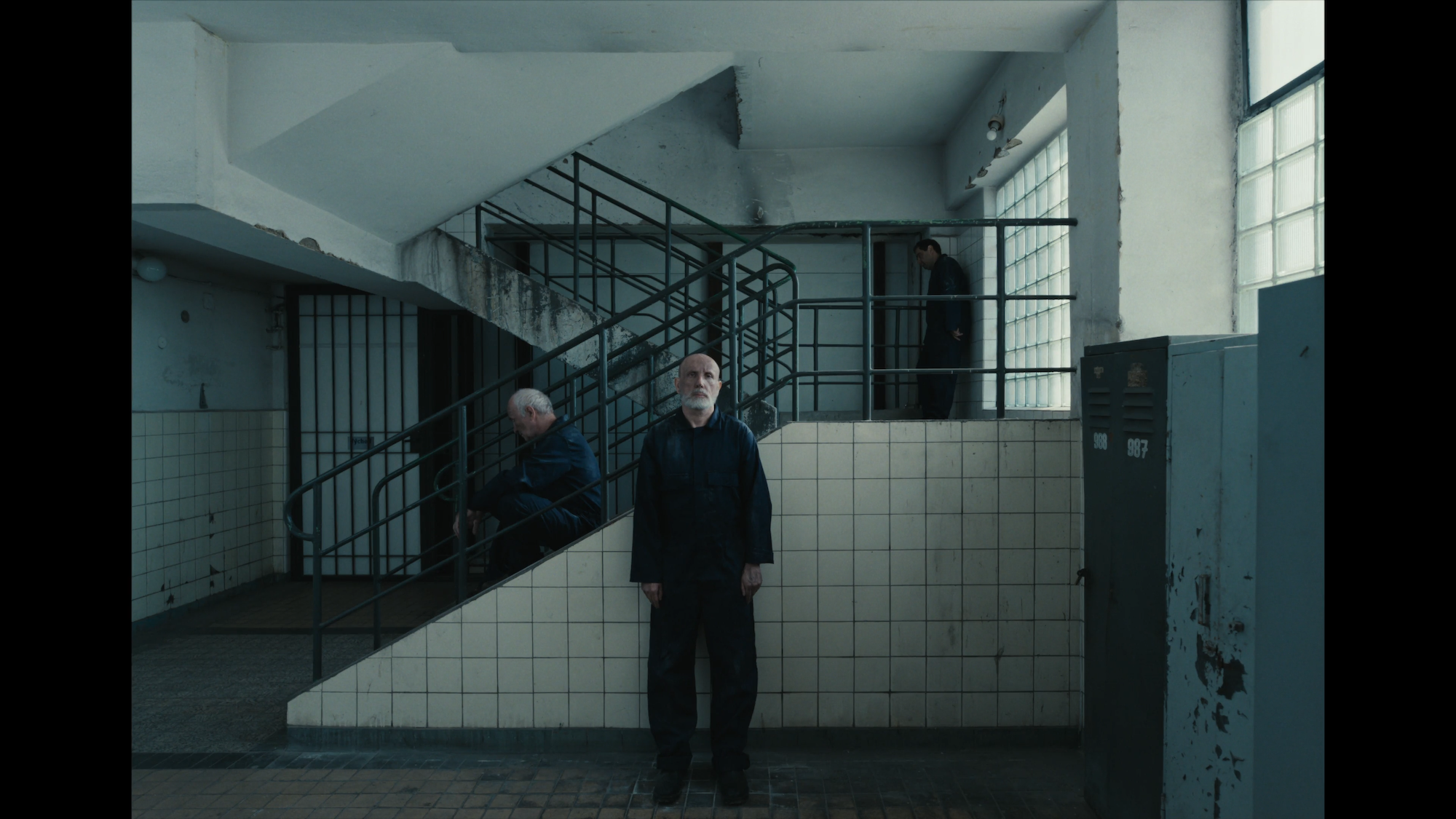
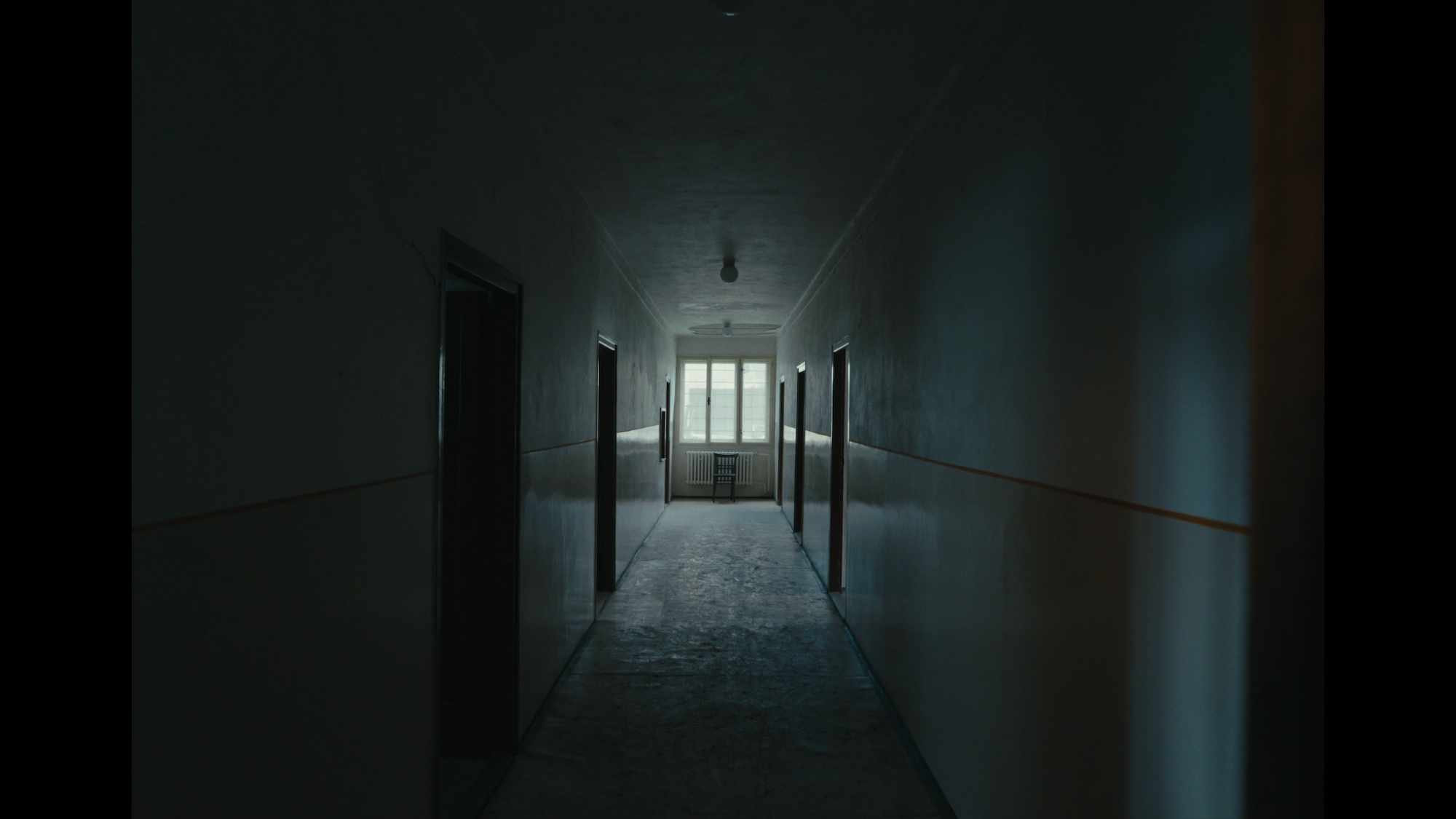
Set within a seemingly timeless factory, First Day explores a journey into darkness and a return to light, with the lasting emotional effects of that experience expressed through cinematography, color and composition.
"When I first read First Day, I understood it as a journey into darkness, followed by a return to the light, only to realize that some of the darkness you've encountered will stay with you forever," explains Botero.
"At the same time, this journey takes place inside a factory where time seems not to exist, as if it had never passed at all. These two ideas became the foundation of my cinematographic approach. I wanted to create a journey through light while confronting the emotional repression imposed by the factory's system."
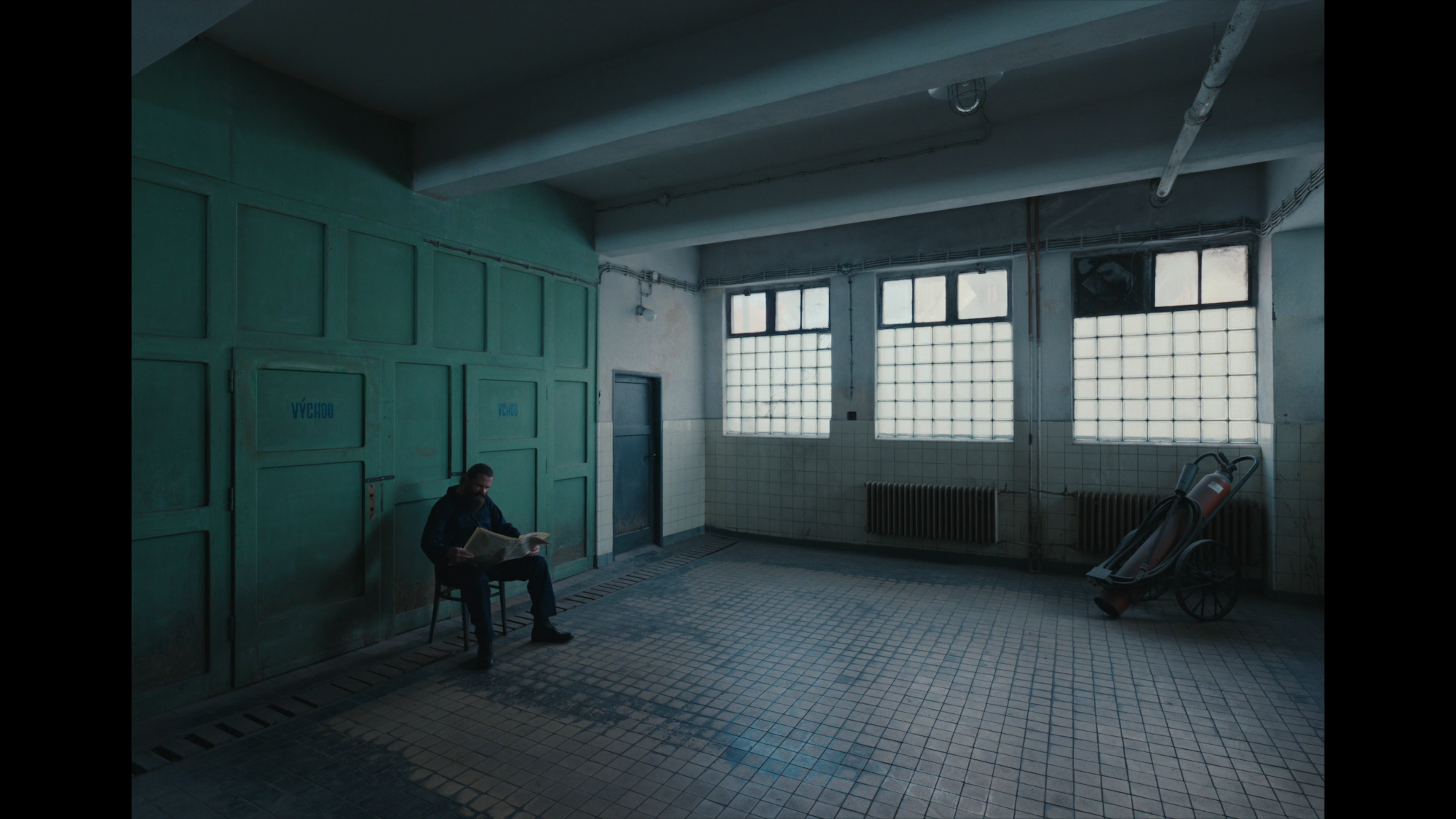
Botero developed a carefully considered progression through light and color. The film begins with soft, low-contrast lighting, gradually shifting towards harder, more contrasted imagery as the character descends into darkness. When he returns to the light, the softness returns, but the contrast remains slightly higher, suggesting that the experience has left its mark.
Color, meanwhile, follows an almost opposite trajectory.
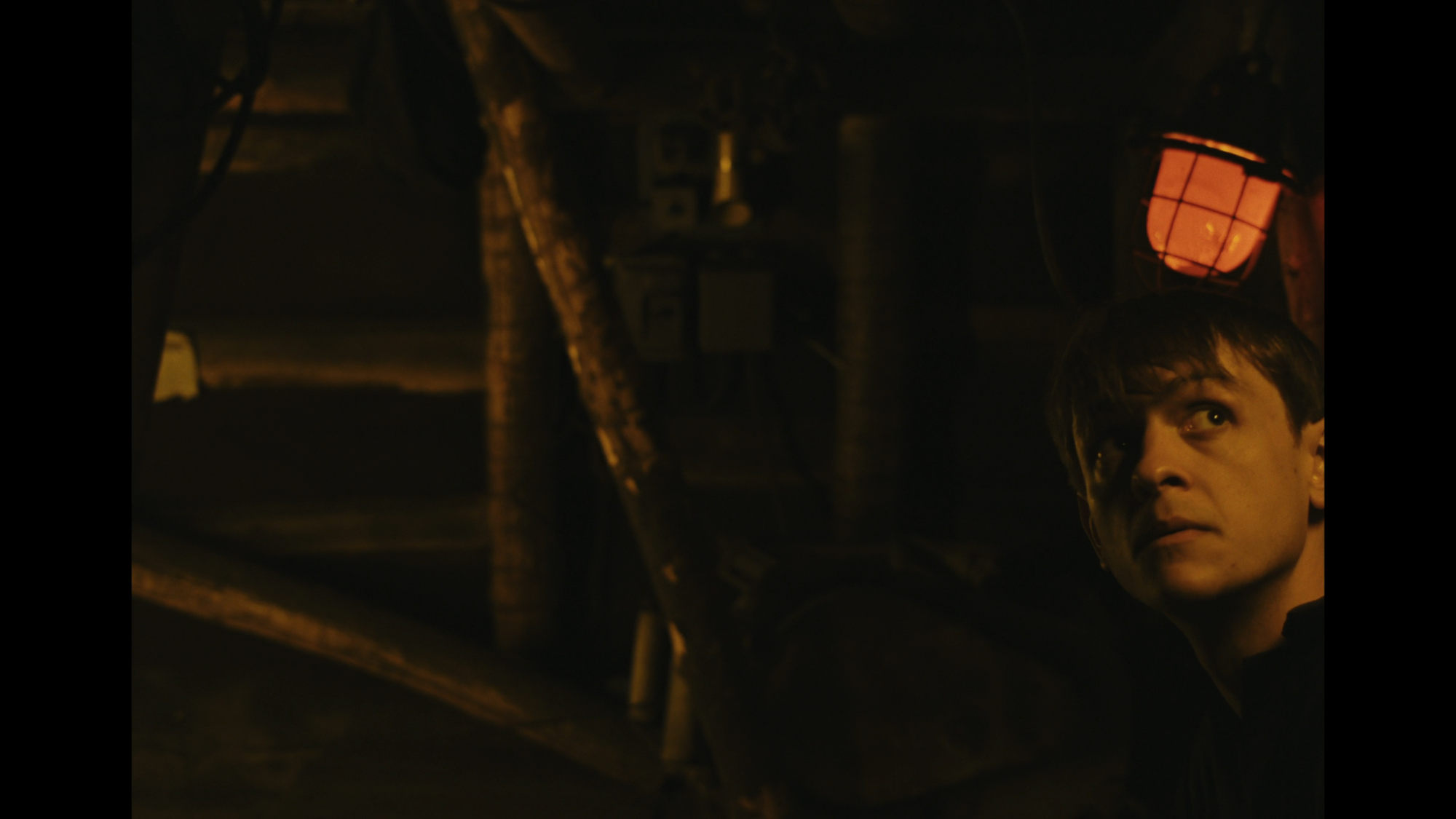
"The deeper we move into darkness, the more alive, present, saturated and diverse the colors become," says Botero. "I wanted this to help explain why so many characters in the factory chose to remain in the darkness rather than return to the light. After all, darkness is also a fascinating world, and color becomes a way of revealing that fascination."
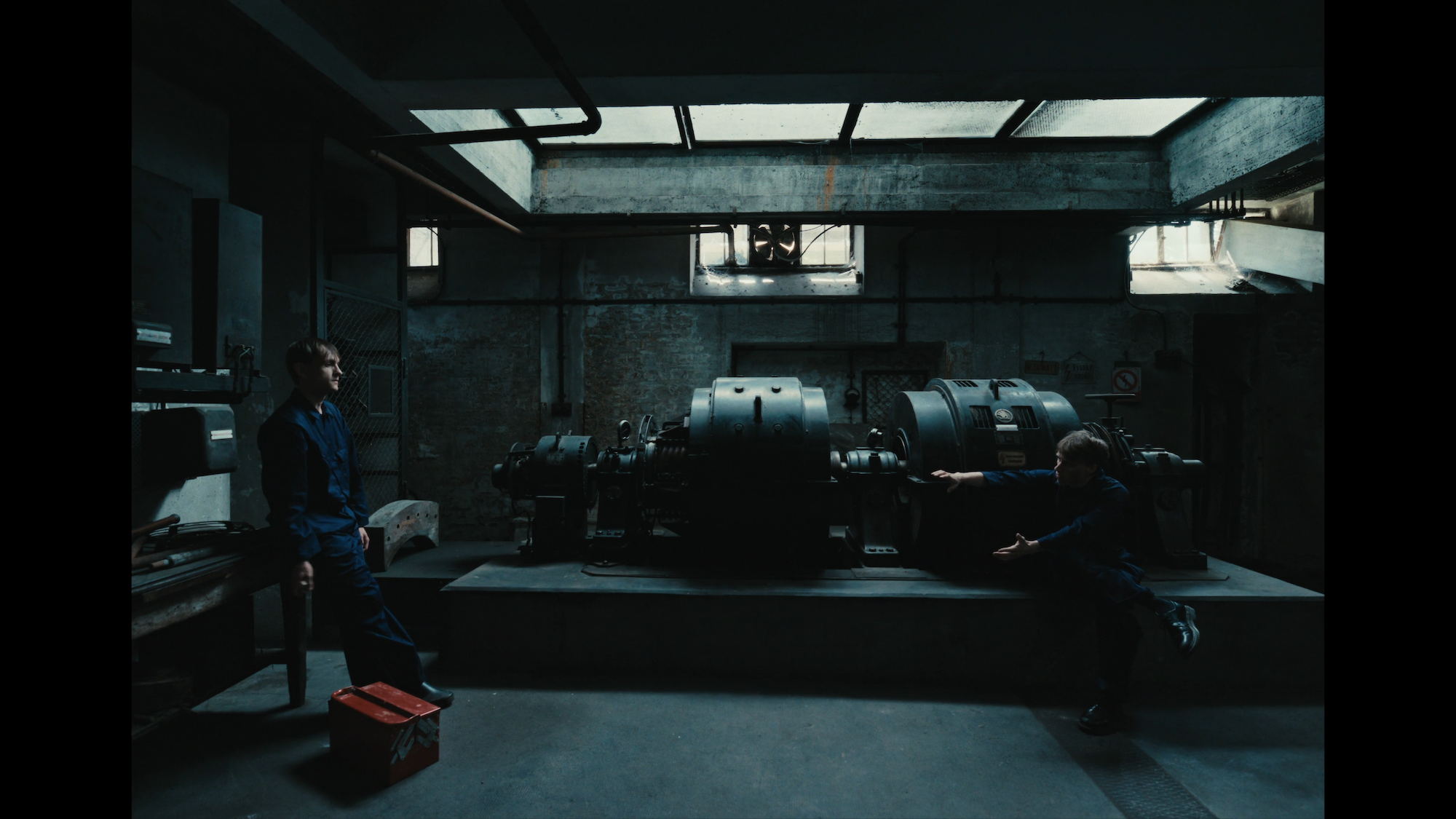
Drawing inspiration from the paintings of Vilhelm Hammershøi and René Magritte, alongside the cinematic work of Roy Andersson, Botero shot the film on the ARRI ALEXA 35 with Signature Prime lenses. Predominantly wide, rigid compositions reinforce the factory's oppressive environment, reducing the central character to what Botero describes as "just another tiny cog in the machinery of the factory."
First Day
Finding depth within restraint
For Martínez, the principal challenge was achieving depth and dimensionality within the film's restrained, often desaturated palette, without relying on excessive contrast.
"I remember his pictorial references very well: Vilhelm Hammershøi, René Magritte, and the cinematic world of Roy Andersson," says Martínez. "That really helped me step into the universe the project was proposing, and in a way my expectation was to arrive at an image that – even with these levels of desaturation and softer contrasts – doesn't lose its volumetric quality."
Martínez admits that this required him to adapt his own creative instincts.
"I'm always chasing volume in the image. It's hard for me, for example, to produce something flat – not because I can't, but because my eye pulls me somewhere else. And in First Day the challenge was significant, because all those pictorial references achieve a very particular kind of volume without pushing contrast to the extreme."
Working in DaVinci Resolve, Martínez initially found himself pushing the contrast further than Botero had intended.
"I remember my first color pass was much more contrasted than Andrés was expecting – very much 'my style' in terms of contrast, because my eye took me there."
The process became an exercise in embracing a different visual language, allowing the cinematography and artistic references to guide the final grade.
For Botero, Martínez's interpretation of those references was central to the film's finished look.
"Felipe brought a life to First Day that we didn't even know was possible," says Botero. "Even though around 65% of the film takes place in a relatively restrained, desaturated world with very little color, Felipe understood my references from painting so precisely that he was able to enhance the entire journey through contrast, while giving the film a texture that tells its own story."
The treatment of darkness was particularly important, with Martínez balancing deep blacks against the preservation of subtle shadow detail and texture.
"He knows exactly when blacks need to be truly black, and when there's information in the shadows that deserves to be preserved and given texture, even when it's on the verge of disappearing completely," Botero continues. "I think he found exactly the right orange, green, and blue tones that the night and the darkness needed. Those colors became essential to the emotional identity of that world."
First Day
A shared creative language
Despite working remotely, Martínez and Botero found the grading process remarkably straightforward, communicating through email, WhatsApp and Frame.io.
"Andrés is a very organized person, precise in his process," says Martínez. "I love that he respects the creative process of color as much as his own process before, during and after shooting."
For Botero, the collaboration was particularly meaningful because of their shared roots in Cali and the city's strong filmmaking community.
"We're both from Cali, Colombia, a city with a very particular and important history of making films with friends," he explains. "Because of this, almost all filmmakers from Cali know each other in one way or another, and there's a strong sense of mutual support, sometimes even from a distance, without necessarily saying much."
Botero had long hoped to collaborate with Martínez, but wanted to wait until he had a project with a sufficiently developed visual language.
"Working with a colorist is like working with a painter, an artist, another cinematographer who knows how to listen and translate your words and thoughts into images," says Botero.
The strength of the film's visual language was recognised during the Talent Demo programme, when cinematographer Frederick Elmes watched First Day and spent an hour discussing its visual concept with Botero.
"Throughout that conversation, Fred repeatedly praised how cohesive and consistent the color was with the lighting, the cinematography as a whole, and, most importantly, the story itself," recalls Botero.
"I think that's exactly what we managed to achieve. We created a visual language that takes risks, but where every single element is moving toward the same visual and narrative horizon. Felipe was the key to bringing all those elements together, refining them, and making the entire visual language feel like one unified whole."
First Day
A collaboration that continues to grow
The relationship between Martínez and Botero has since opened doors to further projects involving FAMU students and graduates, with Martínez recently grading three additional films connected to the Prague school.
"Thanks to this close collaboration with Andrés, he's started recommending my work to other colleagues from his school," says Martínez. "That has opened doors to visual universes that are literally from another world – very different from what I'm used to working on day-to-day from this side of the planet (Latin America). I don't mean better, I mean different, and I like that because it challenges me to explore other ways of working with the image."
Martínez hopes to visit FAMU next year to build on these relationships and continue collaborating with emerging international filmmakers.
For both artists, the opportunity to present First Day at ToruńCAMERIMAGE represents an important milestone.
"It's a festival where cinematography is truly understood as a form of storytelling," says Botero. "To share a film in which so much of the narrative is carried by light, color, texture, and composition, and to have that work appreciated by people who are deeply passionate about the art of cinematography, is incredibly rewarding."
For Martínez, the recognition also reinforces the importance of supporting independent filmmaking alongside commercial projects.
"It reminds us why we need to support good cinema, and to always find a balance between the commercial day-to-day and what truly fills our souls artistically," he concludes.