
Building one visual world: 100 Years of Solitude (Part 2)
Featured in postPerspective
From extensive lens testing and early look development to an ACES colour pipeline and final grade, the team behind One Hundred Years of Solitude Part 2 explains how collaboration from the very beginning helped protect the creative vision all the way to the finished image.
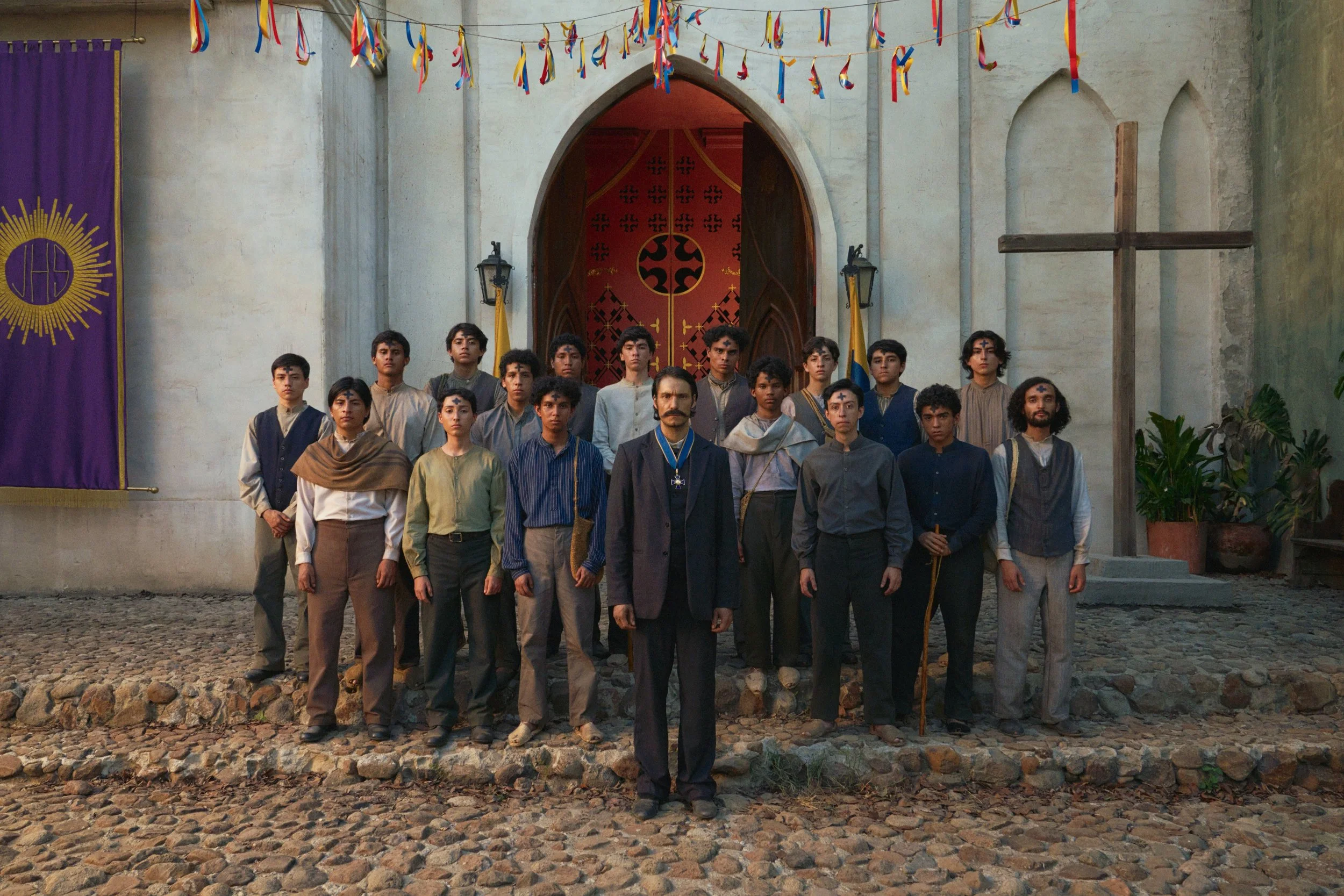
Netflix’s ‘One Hundred Years of Solitude’ Part 2
Adapting One Hundred Years of Solitude comes with an unusual level of responsibility. Gabriel García Márquez’s novel is not only one of the most celebrated works of literature in the world, but an enormously important part of Colombian cultural identity. For the filmmakers behind the screen adaptation, the challenge was therefore never simply to create beautiful images. Every creative decision had to serve the story, respect the world of the novel and preserve the authenticity of Macondo as it transformed across generations.
For Part 2, that responsibility also came with another challenge – how to evolve an established visual language without losing what had already been created.
The answer lay in preparation and collaboration. Rather than treating cinematography, dailies and final colour as separate stages, the team began thinking about the image long before principal photography. Director and showrunner Laura Mora, cinematographers James Brown and Camilo Monsalve, post supervisor Sebastián Bueno, post and colour supervisor Felipe Martínez U., colourist Sandra Klass and the wider production and post teams worked together to create a framework capable of carrying creative decisions from the earliest camera and lens tests through almost nine months of photography and into the final grade.
For Martínez, the experience reinforced a principle that has increasingly shaped his approach to colour and post-production.
“Post doesn’t start after the shoot,” he says. “For many people, that’s still not as obvious as it should be.”
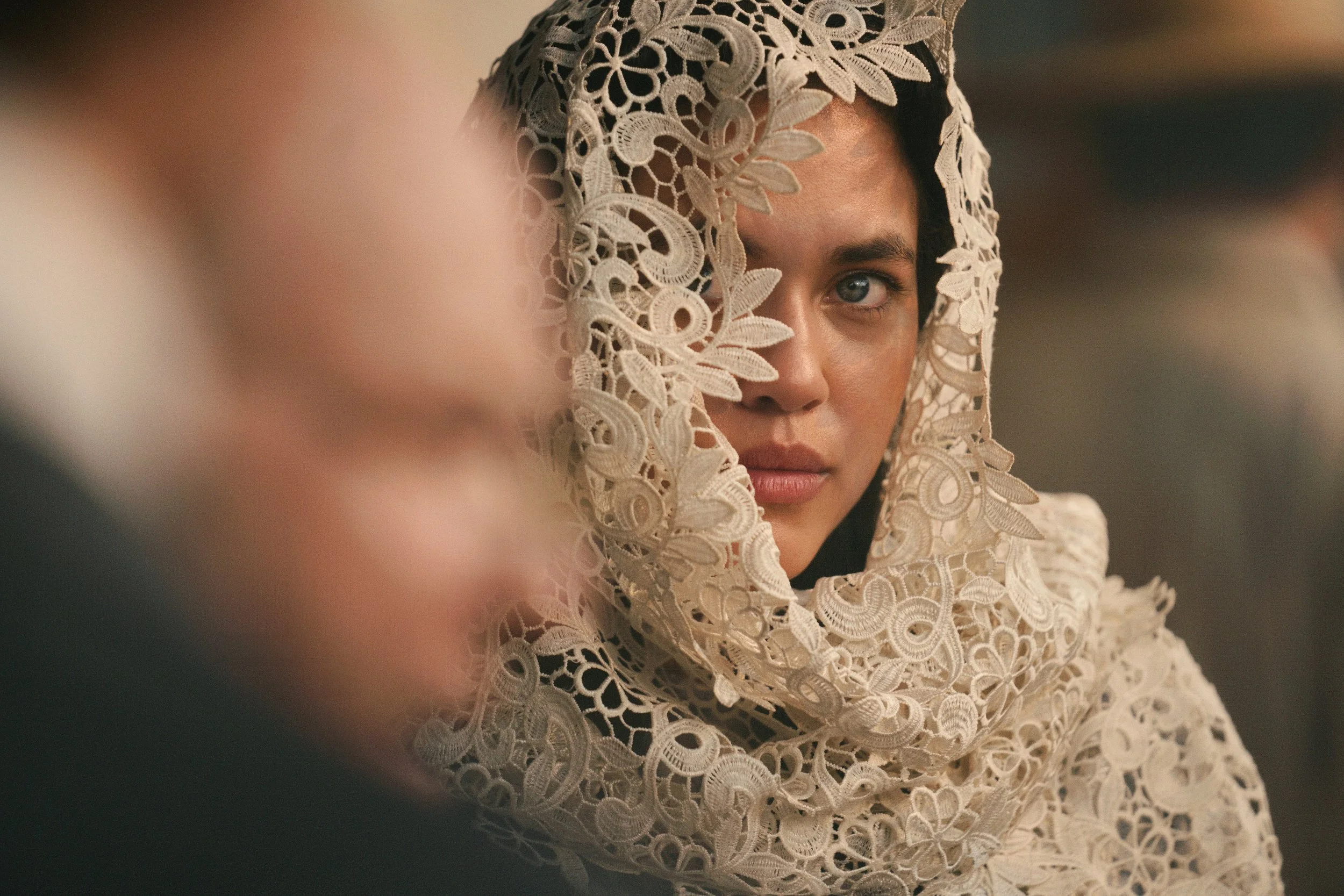
Netflix’s ‘One Hundred Years of Solitude’ Part 2
Learning from experience
This philosophy was informed partly by the team's experience on the first part of the series.
Martínez had joined Part 1 after photography had already wrapped. While he was able to oversee colour and post-production, many of the decisions that would ultimately affect the image had inevitably been made before he arrived.
“I’ve always liked being involved in the post-production and colour process from the very beginning – before setting foot in a colour suite and sitting down to design a LUT,” he explains. “On Part 1, I came in after the shoot had already wrapped, which meant I couldn’t really explore the workflow until a lot of decisions had already been made. That was probably the biggest lesson for all of us.”
Part 2 offered an opportunity to approach things differently. This time, Martínez was involved from day one, allowing the team to make decisions early and, crucially, establish how those decisions would be protected throughout production and post.
Bueno brought a similarly production-led philosophy to the project. Before becoming a post supervisor, he worked on set as a DIT, video assist and camera assistant, an experience that fundamentally shaped his understanding of where post-production begins.
“Most of the achievements of a project are not just from post,” he says. “They really need to come from the start, from capture.”
That background has allowed Bueno to become closely involved in conversations with cinematographers around look development, lenses, texture and the relationship between technical choices and narrative. When he began designing the initial workflow and team structure for Part 2, he also knew the scale of the project meant that responsibility needed to be shared. For him, Martínez was a natural choice.
After collaborating across hundreds of minutes of finished productions, the pair had already established considerable trust. Bueno divided the post-supervision responsibilities between them, with Martínez overseeing image while Bueno concentrated on music and sound.
For Bueno, the thinking behind the ambitious image pipeline they subsequently created can be summed up in one word: “Trust.”
Finding the lenses
That process began well before the cameras rolled.
Cinematographers Brown and Monsalve travelled to Los Angeles with Bueno for an extensive period of lens testing, examining more than ten sets of lenses over approximately 96 hours. The team explored a wide range of full-frame anamorphic possibilities from Panavision, ARRI Rental, Bokeh Rentals and more experimental manufacturers before taking the results back to Colombia for detailed evaluation.
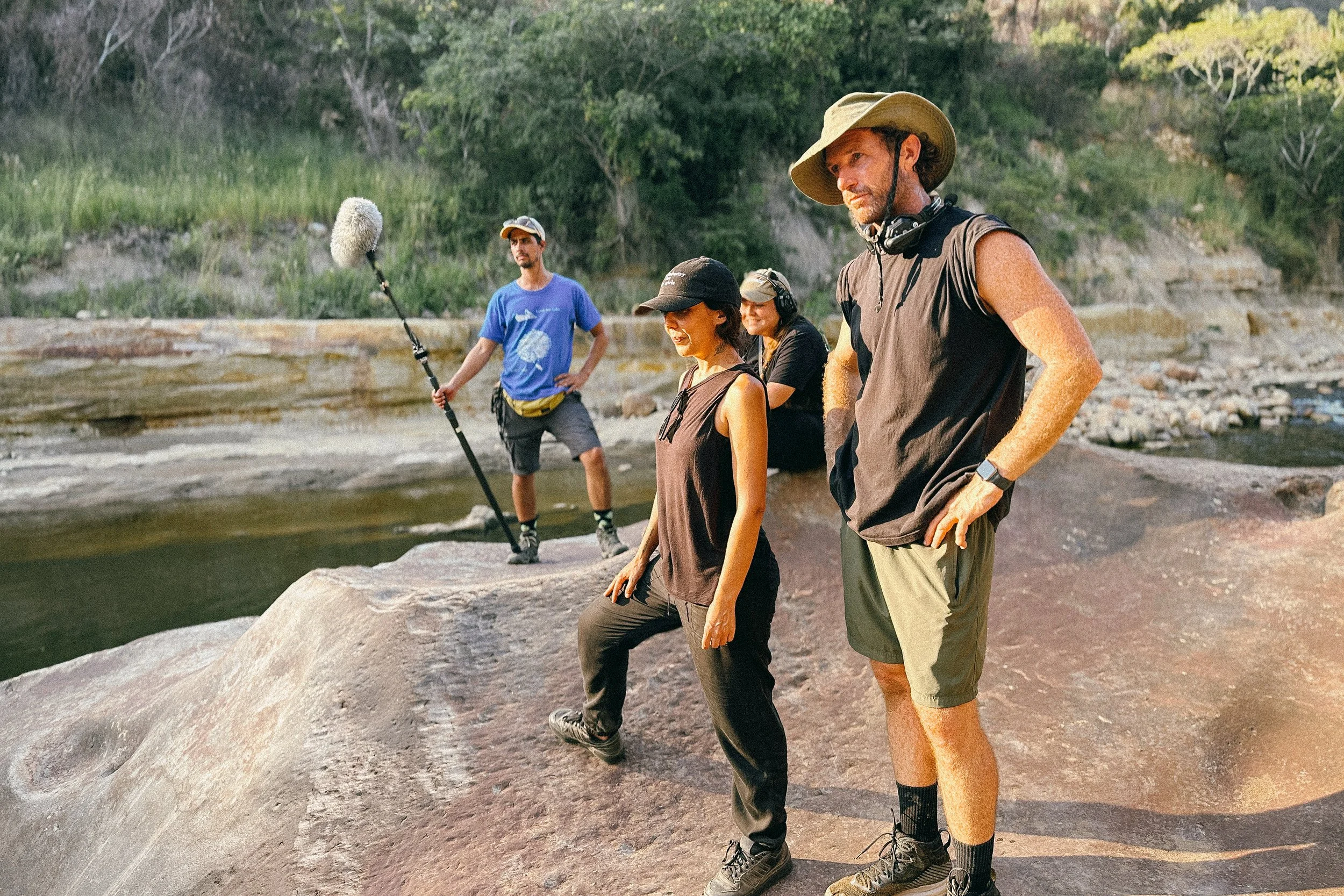
Cinematographer James Brown
The tests considered much more than resolution. Sharpness and colour reproduction were important, but so were texture, flaring, weight, reliability and the individual behaviour of the lenses. The production would be shooting for months in demanding conditions, so the eventual choice needed to work both creatively and practically.
For Brown, who shot five of the eight episodes, however, the testing process was about more than selecting equipment.
“It was probably the most important part of the process,” he says. “Camilo and I travelled to LA and tested more than a dozen sets of anamorphic lenses before settling on our final package.”
For Monsalve, those sessions also became an opportunity to understand the visual world he would be stepping into.
“The sessions became much more than a technical exercise,” he says. “They were an opportunity to talk about the series, about the way James understood that universe, and about how we could continue building it.”
Once the tests were projected and analysed in Colombia, the cinematographers and wider creative team, including Mora, narrowed the possibilities before making the final selection. Bueno credits Colombian rental company Loma Rental with supporting the team in its pursuit of a distinctive image and helping turn the results of the testing process into a practical production package.
Evolving Macondo
For Brown the central creative question was how far the filmmakers could push the visual language of Part 2 without losing the honesty of García Márquez’s world.
“It had to evolve from Part 1, but it could never feel like we were just making prettier pictures,” he says. “For me, the camera always had to move with purpose and the light had to tell the story of the space. Nothing could feel imposed.”
Monsalve similarly saw his role not as creating a second visual identity, but as understanding the language already established and allowing it to develop organically.
“The most important thing for me was understanding that I wasn’t coming in to create a new visual identity,” he explains. “My responsibility was to respect the visual universe that Laura and James had developed during the first episodes while allowing that language to evolve naturally alongside the story.”
Mora had prepared a document describing how she envisioned the visual language changing throughout the season. This provided an important creative foundation as the cinematographers considered the substantial passage of time and the corresponding transformation of Macondo.
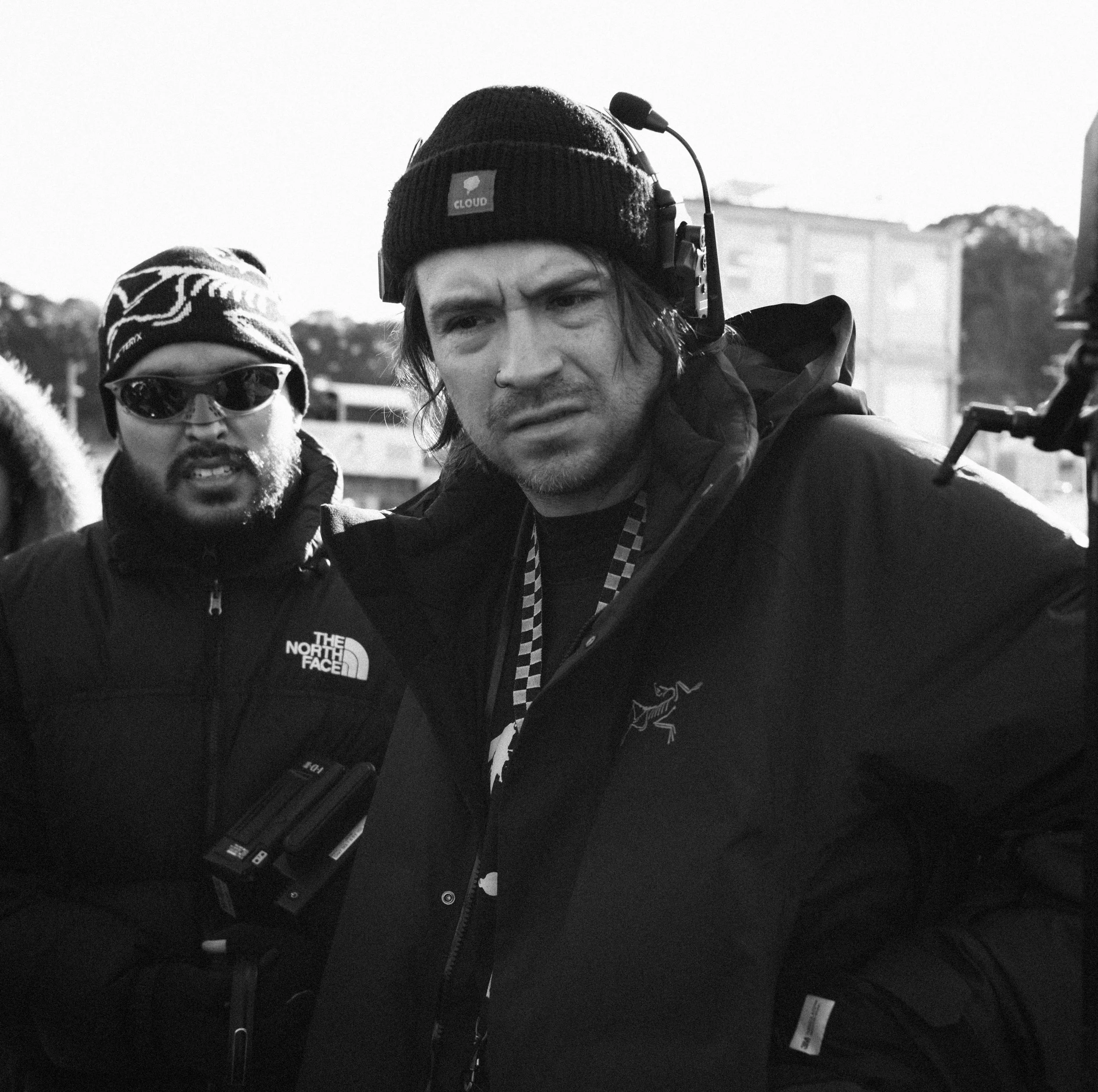
Cinematographer Camilo Monsalve
Monsalve's first episode, Episode 3, coincides with the arrival of electricity in the town. It is a narrative development that fundamentally changes how the characters inhabit their environment and, consequently, creates new opportunities for lighting. By Episode 4, more years have passed and the image continues to evolve with them.
The starting point for those decisions, however, remained the story.
“My conversations with co-director Carlos Moreno always started with the story,” Monsalve says. “Before talking about cinematography, we talked about the characters, what they were experiencing emotionally and what each scene truly needed to communicate.”
From there came the mise-en-scène: camera position, framing, movement and lighting. Rather than imposing an aesthetic onto the material, Monsalve wanted each visual decision to feel like a consequence of what was happening narratively.
Designing the look in SDR
Colour development was happening alongside those conversations.
Colourist Sandra Klass received a colour treatment board and joined extensive discussions around the sets, costumes and different environments within the story. The transformation of Macondo – from a town illuminated by candles to one with electricity – was central, as was establishing a clear contrast between Macondo and Bogotá.
“Laura was steering the look and feel of the entire series with a focus on details to make the series feel more authentic,” Klass explains. “The Caribbean humid warmth, the lush green trees and the candlelit nights were all important.”
One of the team's most interesting technical and creative decisions was to develop the original look in SDR, despite knowing that the finished pipeline would ultimately deliver in HDR with an SDR trim pass in Dolby Vision.
“The creative heads wanted a more cinematic approach to the image,” Martínez explains. “I don’t mean HDR isn’t cinematic. What I mean is that the way SDR responds, especially in the highlights, feels closer to the imaginary we all share: the experience of projection, or the stills we keep as references from the images we love.”
Martínez communicated that direction to Klass, who worked with Brown and Monsalve to develop the bulk of the creative proposal. Once the look had been approved, Martínez translated those creative decisions into the working LUT, alongside a second version designed for footage exposed one stop darker. The entire workflow was then built around an ACES 1.3 colour pipeline, ensuring those creative decisions could be carried consistently from camera tests and production through dailies, editorial and the final HDR master.
The importance of that preparation was that the LUT was not being used to discover the identity of the series during photography. It was there to preserve decisions that had already been made.
“By the time we got to day one of photography there really wasn’t any guessing left,” Brown says. “Everyone knew what the show was supposed to feel like.”
That gave the cinematographers the confidence to expose and light as they intended, knowing that the pipeline had been designed to support those choices all the way to finishing.
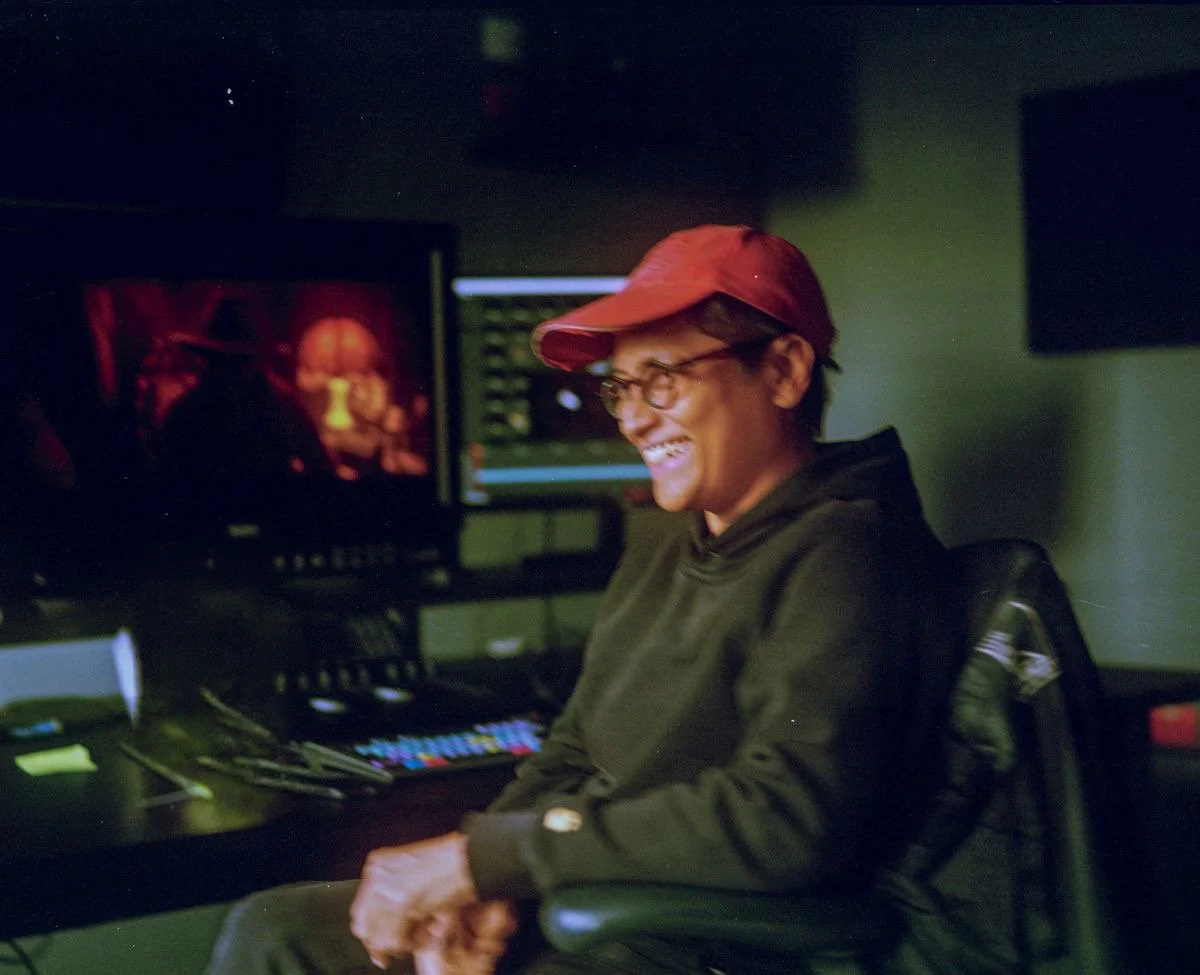
Colorist, Sandra Klass
Two cinematographers, one visual world
With Brown and Monsalve shooting different blocks, maintaining continuity was essential. But consistency did not mean asking one cinematographer to imitate the other.
“Camilo and I never approached it as two cinematographers making different episodes,” Brown says. “We approached it as one cinematography team.”
The pair communicated constantly, watching one another’s dailies and discussing lighting, exposure, camera movement and colour. The framework established during prep gave them a common visual foundation, while still leaving space for their individual instincts.
For Martínez, achieving that balance is one of the aspects of the project of which he is most proud.
“It’s not easy to bring two strong creative voices together and get them to speak in service of the same project,” he says. “Here, everyone understood we had to row in the same direction. James and Camilo, each with their own creative expression, were working towards one shared idea – both guided by the same LUT.”
The result, he believes, is that individual episodes are allowed to develop their own visual character without ever appearing to belong to a different series.
“Even though each episode has its own visual universe, you still feel like it’s all part of the same story.”
Protecting the image on set
As production began, the infrastructure surrounding the image became critical.
Marcos Canfora of Fénix Post joined the project as a post supervisor dedicated specifically to the shoot. Working alongside Martínez and the production team, he became responsible for protecting the workflow established during prep and ensuring that it functioned in the realities of production.
With support from FilmFlowTV, a lab and colour dailies room was established close to the set on the backlot. For Bueno, its importance extended far beyond convenience.
“Production needed fast, dependable answers, and having the technical and creative infrastructure close to the set created confidence between departments,” says Bueno. “It also helped the team maintain consistency across a production involving more than 100 people from different countries, continents and cultures.”
One lesson from Part 1 had been the fundamental importance of transporting creative decisions about the look reliably through every stage of the pipeline. That meant not only managing colour correctly but ensuring that filmmakers could trust the displays on which they were making decisions.
The team therefore established consistent monitoring environments throughout the workflow, using QD-OLED, OLED and calibrated XDR displays across different stages of post. A portable review room based around Colorfront Streaming Technology and a Sony HX310 reference monitor became what Bueno describes as the directors’ “hero setup”.
The aim was straightforward: wherever important creative decisions were being made, the image needed to be trusted.
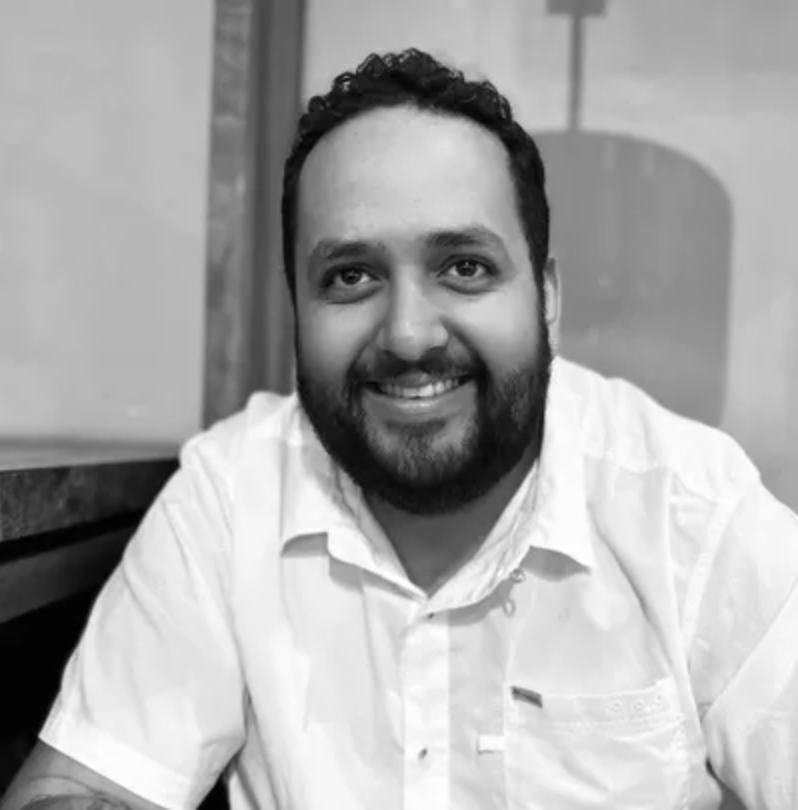
Post supervisor Sebastián Bueno
Dailies that already felt like the show
Central to that process was the decision to employ a senior dailies colourist.
“The dailies colourist is, to me, a key piece of any project that can afford one,” says Martínez.
The role required more than technical expertise. The dailies colourist needed to understand the intentions of Mora and the two cinematographers and respond sensitively to the material over almost nine months of photography.
“He didn’t just bring the technical skills,” Martínez says. “He brought consistency and sensitivity to the image from the very beginning. That was vital not only for maintaining the creative intent, but also for holding the emotional core of the show together.”
For Brown, the value of that work became particularly apparent when material moved into editorial.
"The dailies that came out of this pipeline already felt like the show," he says. "It was a workflow built with many hands, but the look was so clearly defined from the start that the images arrived bullet-proof.
“Laura and the editors were living with that footage for months, and having dailies that held the atmosphere from day one gave everyone confidence. They weren’t imagining what the show might become – they were already cutting something that felt incredibly close to the finished piece.”
Four years of rain
The strength of the established pipeline did not mean that the image remained static. As Macondo and its inhabitants changed, the visual language needed room to change with them. One of the clearest examples of this comes as the story enters a period of four years of continuous rain.
For Monsalve, the challenge was not simply how to photograph rain, but how to find the visual identity of tropical rain.
“From the very beginning, both Laura and Carlos were very clear that it had to feel completely different from the cold atmosphere of the capital established earlier in the season,” he explains. “We wanted rain that felt humid, dense and unmistakably tropical, where even overcast skies retain a unique quality of light.”
Monsalve photographed references in Colombia’s tropical regions, particularly Chocó, studying the way humidity affects skin tones, vegetation and texture.
“Carlos and I often talked about making the audience not only see the rain, but actually feel the humidity and the weight of the air.”
Working with Martínez, the team developed a LUT variation for Episode 7 using the original look as its foundation. Rather than abandoning the established colour language, the aim was to adapt it to the particular physical and emotional atmosphere of this stage of the story.
Colour became another storytelling tool, helping communicate an episode in which darkness, melancholy and resilience coexist.
The evolution also continued in the final grade. Klass describes introducing a different contrast curve from Episode 5 onwards as the situation in Macondo became progressively heavier.
“The colours remained the same, but with a different contrast curve I was able to create a heavier, dirtier and more humid mood without altering the Caribbean feel,” she says.
The result was an image capable of changing significantly with the narrative while remaining rooted in the visual principles established at the beginning.
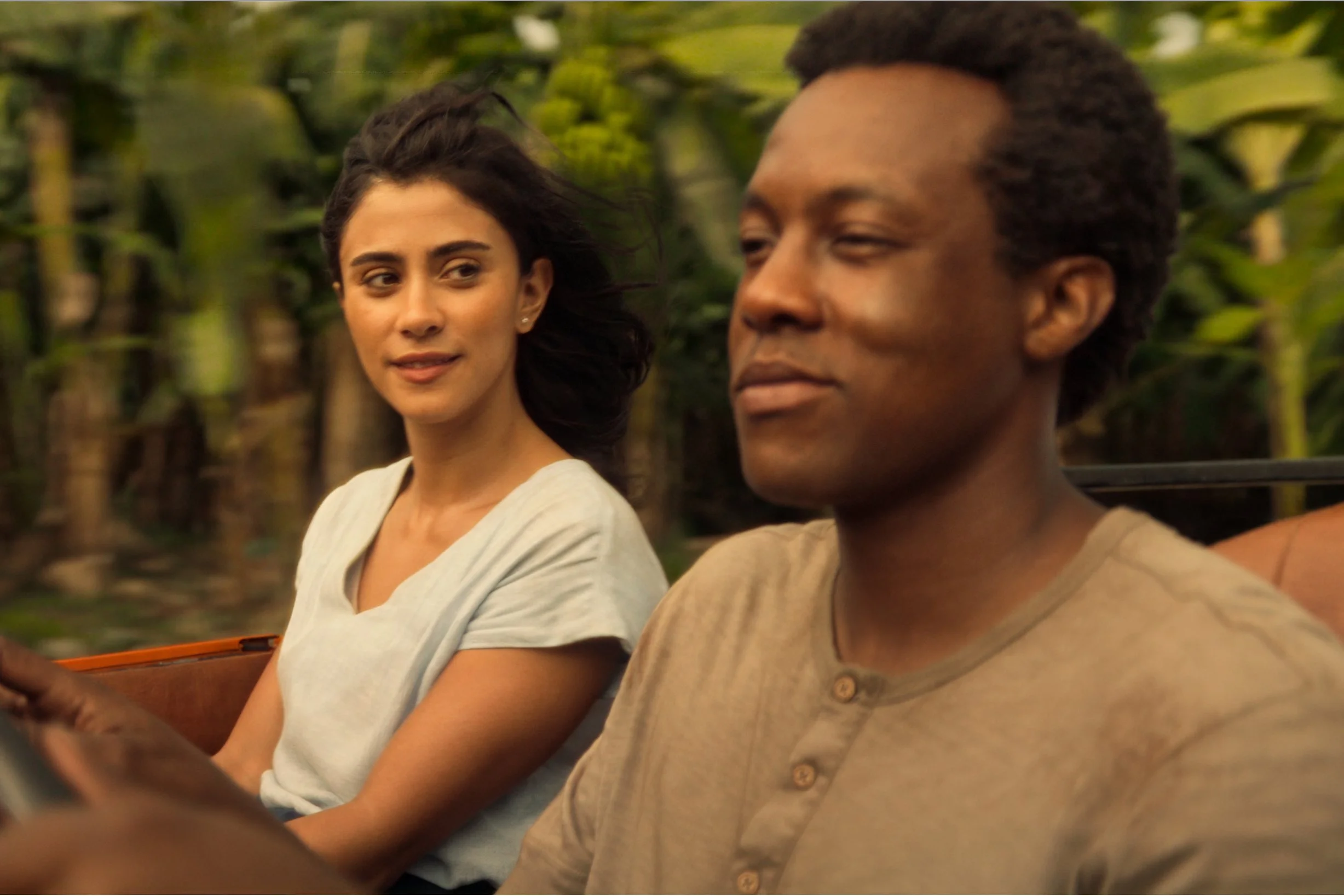
Netflix’s ‘One Hundred Years of Solitude’ Part 2
The final grade
In the final colour grade, Klass worked closely with Brown and Monsalve on their respective episodes, crafting individual scenes and shots through colour, contrast, texture and extensive secondary work.
“We used a lot of masking and an insane amount of Magic Masks to achieve some of the looks,” she says.
For Brown, the combination of technical precision and creative sensitivity is one of Klass's strengths as a colourist.
“Every conversation was about emotion first,” he says. “We’d talk about how a scene should feel and she’d find these incredibly subtle ways of getting us there. Across eight episodes those subtle decisions add up in a huge way.”
Martínez remained involved both creatively and technically, with Klass describing his “laser-sharp focus” on detail and technical correctness. On particularly difficult scenes, the team would draw on his perspective while continuing to make decisions according to the emotional requirements of the story.
Klass also remained acutely aware of her responsibility as an international artist working on an adaptation with such profound cultural importance to Colombia.
“The book is the most important piece of Colombian literature,” she says. “It was important for me to respect and keep the cultural integrity of this adaptation.”
She referenced Colombian films, asked questions and listened closely while working in Bogotá, seeking a balance between authenticity and modernism without losing the emotion required from scene to scene.
“I am proud to have been involved in this epic project.”
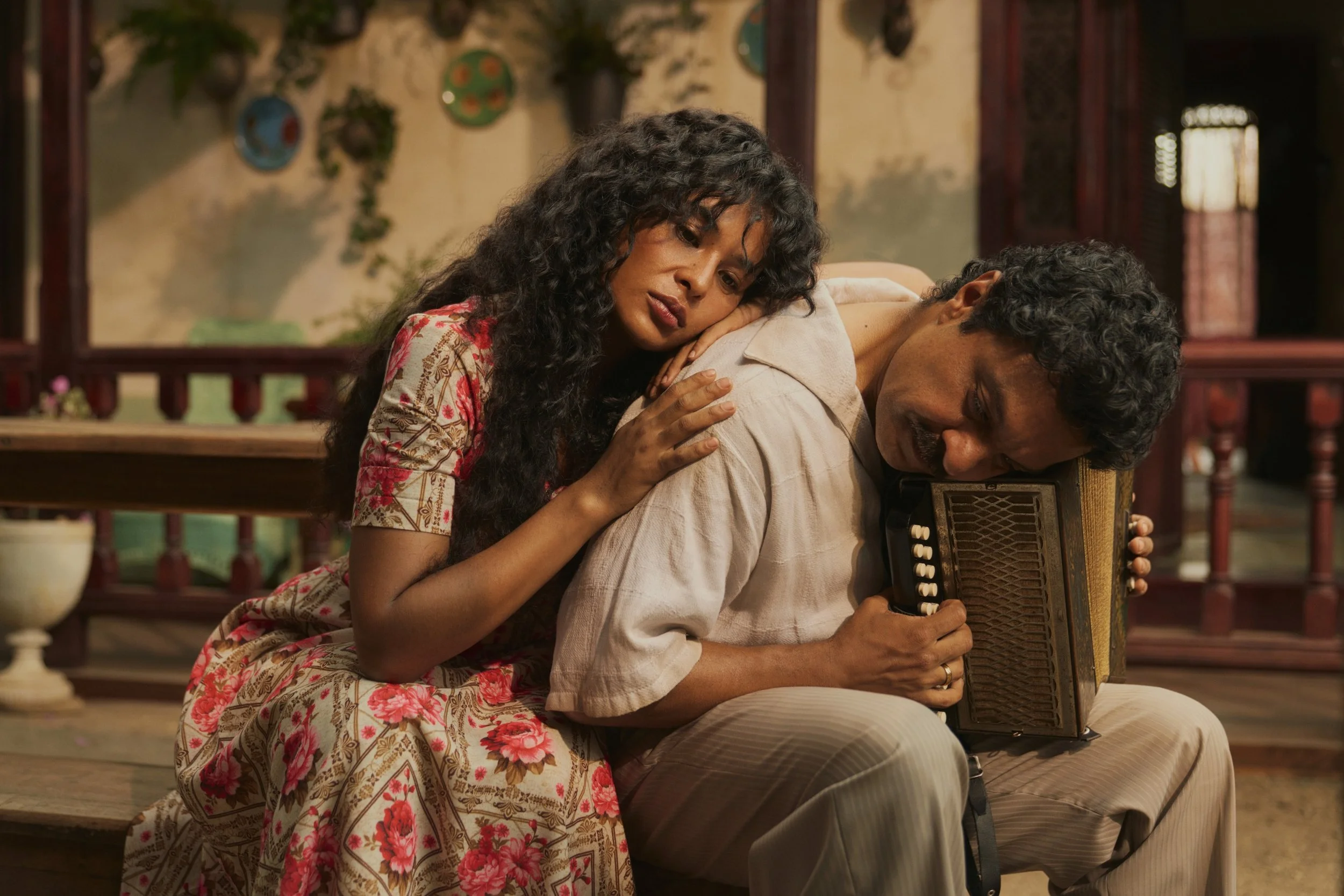
Netflix’s ‘One Hundred Years of Solitude’ Part 2
Protecting the creative vision
Across a production of this scale, the technology behind the images was considerable: ACES colour management, LUTs, calibrated monitoring, dailies colour, remote streaming, HDR finishing and Dolby Vision delivery all formed part of the wider workflow.
Yet the technology is not what the filmmakers return to when they reflect on their experience. Instead, they talk about preparation, communication and trust.
“This was one of those projects where the work the audience never sees turned out to be the most important,” Monsalve says. “There was an enormous amount of preparation, countless conversations and very careful planning before every episode was filmed.”
For Bueno, maintaining that shared vision across a team of more than 100 people and a journey lasting around three years was itself one of the greatest challenges. It required not only technical planning but communication, diplomacy and a continued insistence on quality.
A phrase began to circulate within the team: “If not on this show, it’s never.”
The scale of the collaboration extended beyond the individuals involved, bringing together companies across different countries and different stages of the workflow.
“For me, that's an important message from this project,” says Bueno. “We showed that companies that might sometimes be seen as competitors can come together and collaborate when the project demands it. Whether the task is big or small, ultimately we're all working towards the same thing: giving the production the best possible result.”
That collective effort included WeMakeColor México, which provided a review room in Mexico City; Quanta, with a review room in Argentina; Oxido, with additional review facilities in Mexico; FilmFlowTV, which provided on-set services and the dailies lab; EFD Digital Colombia, the post facility; and FenixPost, which oversaw post supervision.
Bueno also credits Netflix and production company Dynamo “for supporting the level of collaboration and ambition required to bring the workflow together”.
For Martínez, meanwhile, one of the most satisfying achievements was simply seeing the colour pipeline conceived during prep survive intact all the way into the final colour suite. He credits the close collaboration with the Fénix team, and particularly Canfora's work protecting the pipeline throughout production.
“Being able to sustain the colour pipeline from design all the way into the colour suite is something that makes me very happy,” says Martínez. “And that wouldn't have been possible without the spirit of collaboration we have with the FenixPost team – especially Marcos Canfora, who looked after every detail of the pipeline we designed and protected it until he passed the torch to us for post-production.”
Brown similarly describes the collaboration between WeMakeColor, FenixPost and EFD Digital Colombia as one of the most impressive elements of the production.
“Every technical question had been answered before it became a problem,” Brown says. “That gave us an enormous amount of confidence all the way through production.”
Ultimately, that confidence allowed the technology to recede into the background. The infrastructure existed to protect creative decisions rather than dictate them, allowing two cinematographers, multiple production and post teams and a colourist working across eight episodes to contribute to one evolving visual world.
“As a cinematographer, that’s the dream,” Brown says. “It never felt like someone was grading our work. It felt like someone understood exactly what we were trying to achieve and helped us get there.”
And for Martínez, the project ultimately brings the process back to the principle with which it began.
“Being involved from the very beginning proves, once again, how important it is to understand that post doesn’t start after the shoot.”